A New York University experiment found that human cells exposed to simulated microgravity for 24 hours showed stable genome organization, no detectable DNA damage, and an unchanged nuclear envelope, though the nucleus enlarged and the nucleolus smoothed. Researchers used a custom random-positioning machine and algorithms to separate gravity's effects from fluid flow, a control that may explain misleading results in past studies.
Simulated Microgravity Leaves Human Cells Largely Unchanged
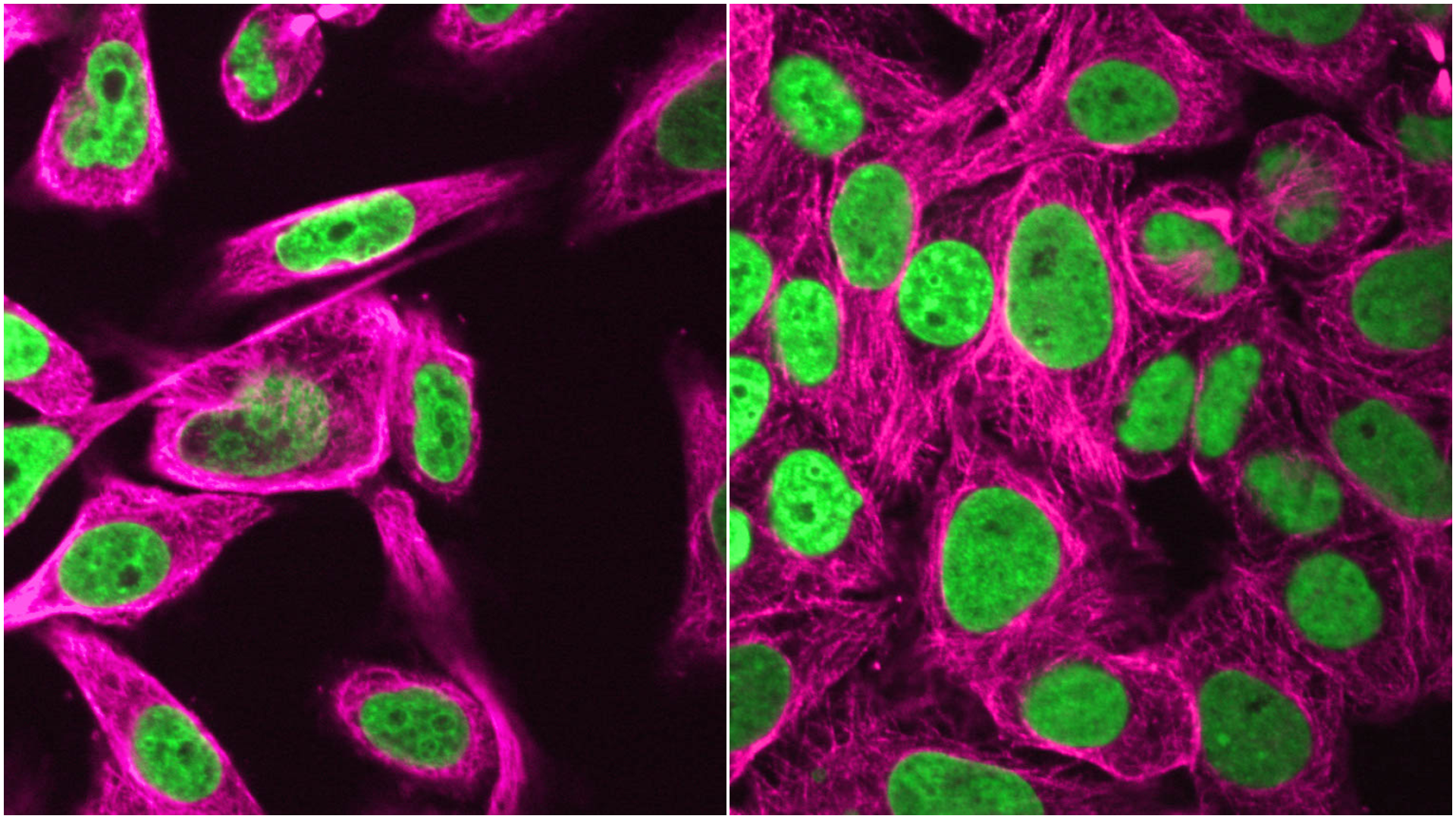
Source: Space